
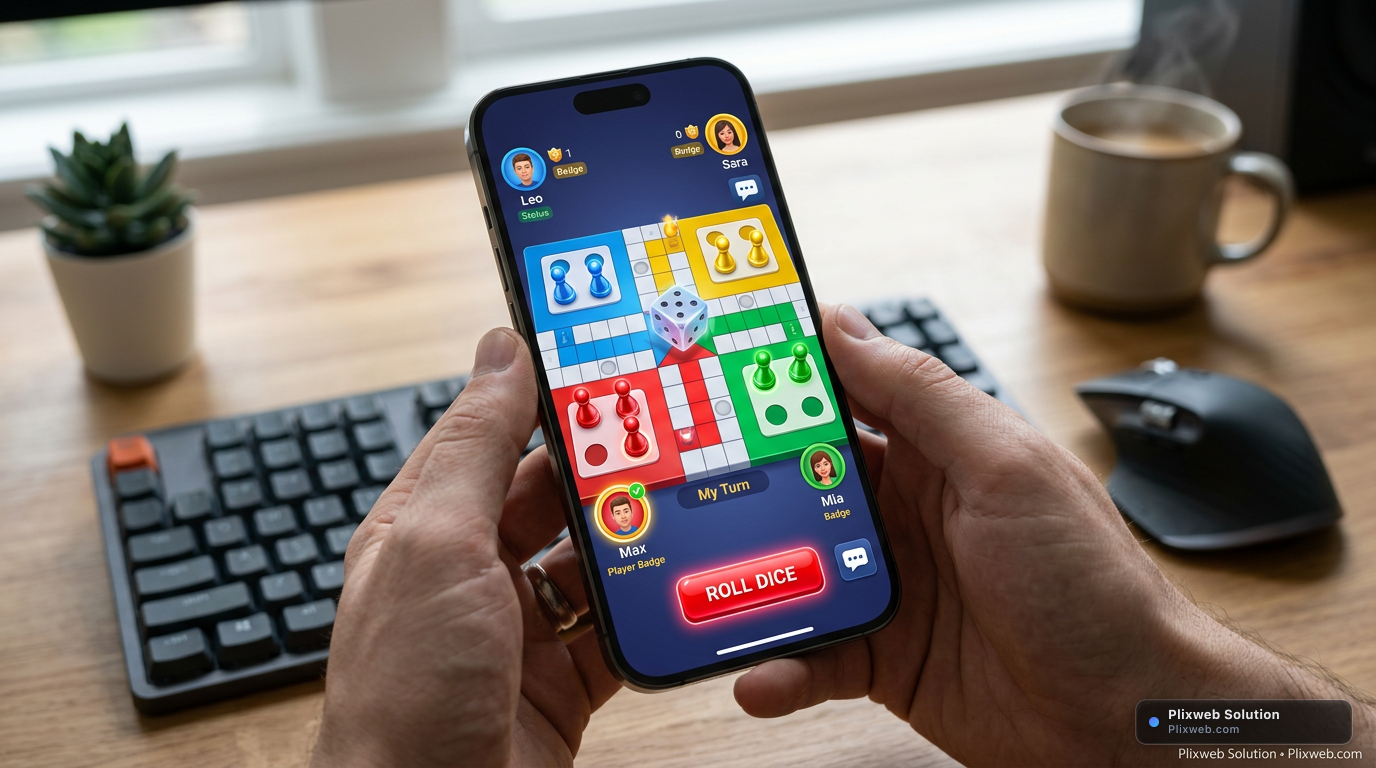
> Executive Summary & Answer-First Blueprint: Building a high-concurrency custom multiplayer Ludo game in 2026 requires an authoritative, scalable game engine. The mobile application built with Flutter 3.x acts as a high-performance visual client rendering smooth 60–120 FPS animations. All game rules, pathing matrices (0–56 positions), turn timers, and dice outcomes using hardware-entropy cryptographic RNG are calculated strictly on an authoritative backend powered by Node.js and Go microservices backed by an in-memory Redis Pub/Sub room cluster. Under India's 2026 Online Gaming Framework and global App Store standards, the platform is engineered as a compliant Free-to-Play (F2P) social gaming ecosystem monetized through cosmetic In-App Purchases, 3D dice skins, and rewarded video ads.
The Modern Ludo Ecosystem in 2026 — Social Gaming & Regulatory Clarity
The mobile gaming market has fundamentally shifted. In 2026, founders are moving away from restrictive, high-risk real-money wagering models to build sustainable, globally scalable Free-to-Play (F2P) Social Gaming Platforms.
Under the Government of India 2026 Online Gaming Framework and global app store guidelines, social games with zero cash deposits, skill-based gameplay, and virtual non-cash coin economies enjoy unrestricted organic reach, fast app store approvals, and massive user retention.
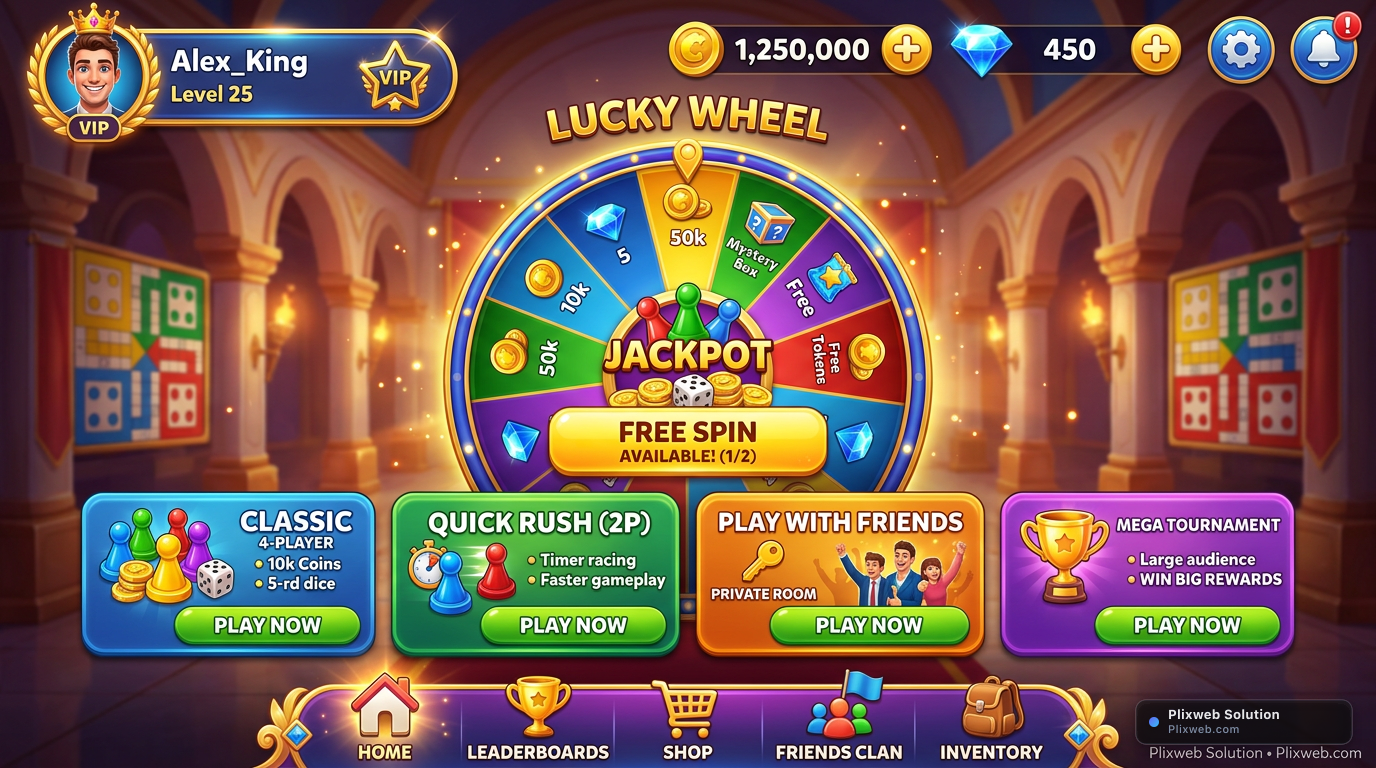
Core Engagement Modes Driving High Retention:
- Classic 4-Player Matchmaking: Connects four live players within balanced Elo/MMR skill tiers for fair, competitive matches.
- Quick Rush Blitz (2-Player): Fast-paced 1-token or 2-token blitz matches with 10-second turn clocks designed for quick 3-minute sessions.
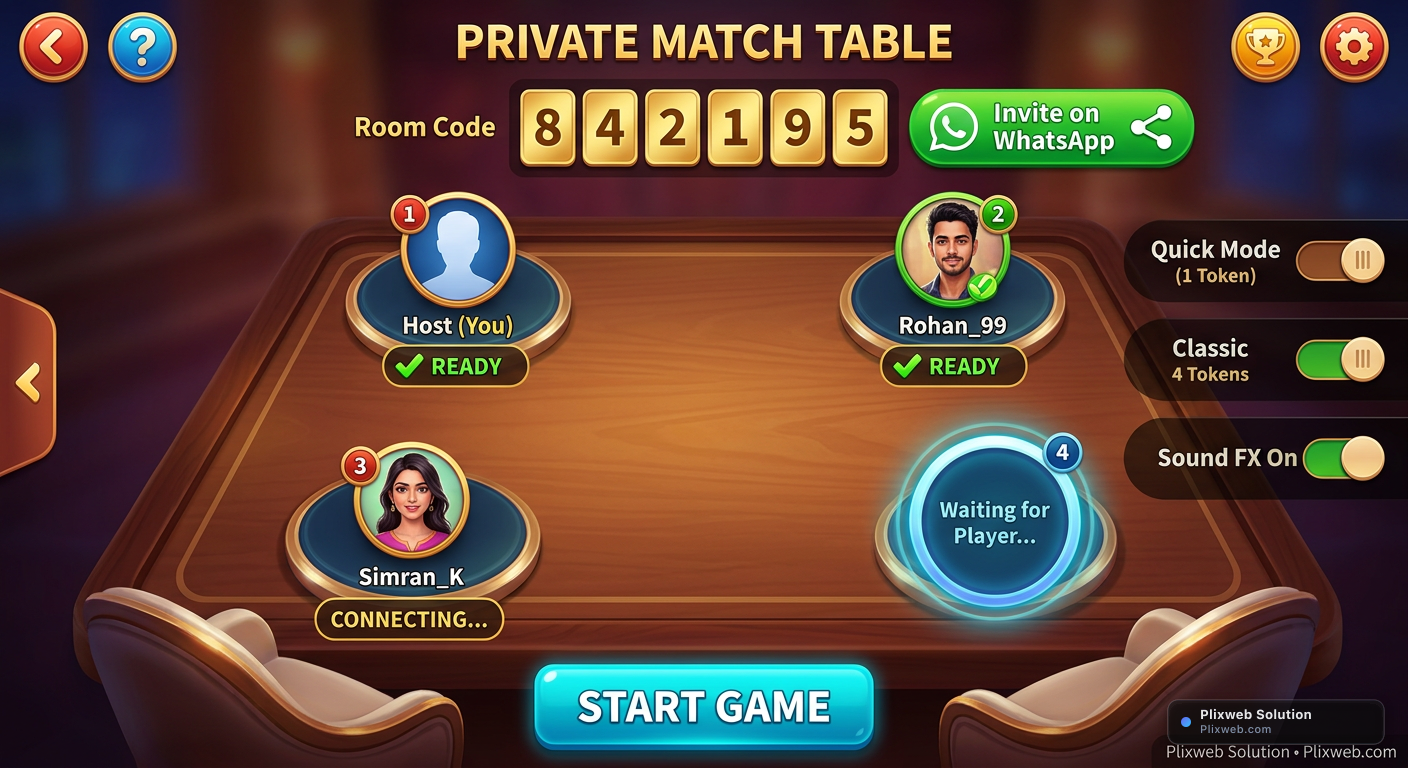
- Play with Friends (Private Rooms): Frictionless private tables secured by 6-digit numeric passcodes with instant one-tap WhatsApp deep-link invites.
- Pass & Play (Offline Local): Single-device multiplayer supported by intelligent heuristic AI bots for offline play without an internet connection.
- Daily Spin & Streak Quests: Daily Lucky Spin Wheels offering free virtual coin rewards and gem drops that drive 30-day user retention above 42%.
Executive Comparison — Client-Side Logic vs. Jkard Server-Authoritative Engine
Founders frequently ask why basic freelance templates fail under scale. The difference lies in architectural authority:
Real-Time Multiplayer Architecture & WebSockets Synchronization
In a live multiplayer match, latency and fairness define player satisfaction. When a player taps the roll button, the action must feel instantaneous across all connected devices globally.
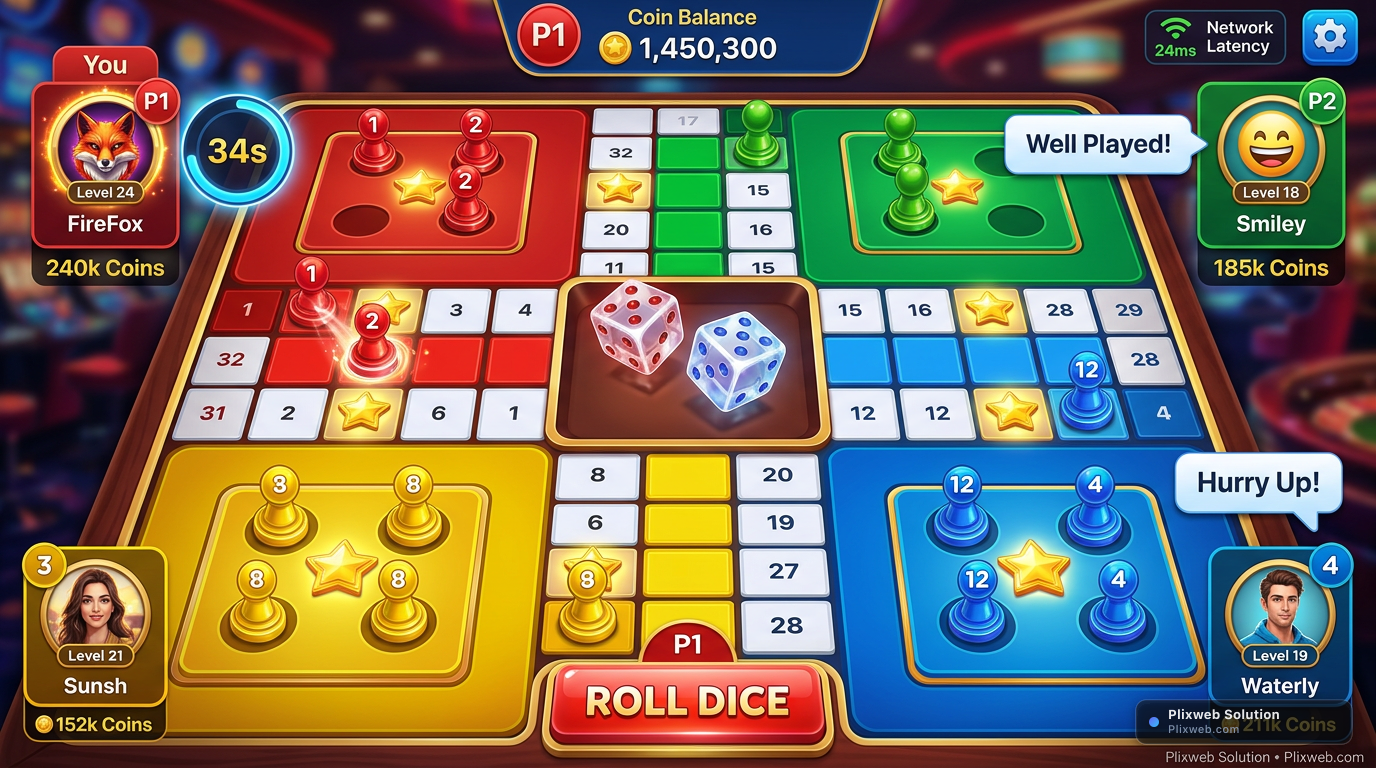
The Real-Time Event Lifecycle:
- User Action Intent: The player taps "ROLL DICE". The Flutter mobile engine sends a lightweight event intent to the game server.
- Gateway Verification: The WSS gateway authenticates the player's session token and verifies it is strictly their turn before passing the packet.
- Cryptographic Dice Generation: The server executes a secure random integer generation (1 to 6) using server-side hardware entropy.
- Legal Move Calculation: The game engine computes valid movable tokens based on the current board coordinates and pathing rules.
- Multi-User State Broadcast: The updated dice value, valid tokens, and a 15-second turn timer are broadcasted simultaneously to all participants in the room via Redis Pub/Sub channels.
Deep Implementation Roadmap ("Kaise Kaam Hoga")
Transforming a game concept into an App Store chart-topper requires a disciplined, five-stage engineering roadmap:
Stage 1: Mathematical Logic & Safe Zone Matrix
- 52-Step Perimeter Path: Mathematical coordinate mapping where tokens traverse from position 0 through 51 before entering their dedicated home run.
- 8 Safe Zone Star Tiles: Predetermined safe squares where tokens cannot be captured or sent back to base.
- Knockback Collision Rules: When an attacking token lands on an opponent on an open tile, the defending token resets to yard position -1, and the attacker earns a bonus roll.
Stage 2: Hardware-Accelerated Flutter 3.x Client
- 60–120 FPS Rendering: High-fidelity board animations, smooth token hopping curves, and 3D dice physics powered by Flutter custom shaders.
- Haptic & Audio Feedback: Realistic acoustic wood taps, dice shaker vibrations, and celebratory audio cues optimized for low battery usage.
Stage 3: In-Memory Redis Clustering for 50,000+ Rooms
- Stateless application workers communicate through distributed Redis clusters, allowing instant horizontal autoscaling during peak evening gaming hours.
Stage 4: Anti-Cheat Safeguards & Automated Bot Takeover
- Time-Warp Packet Rejection: Prevents network tampering by rejecting any packet with manipulated device clock timestamps.
- Graceful Disconnect Buffer: If a player loses cellular signal, an automated AI agent smoothly takes over their turn for up to 30 seconds, allowing them to reconnect without disrupting the match.
Victory Celebrations, Fair-Play Certification & Player Retention
The emotional highlight of any casual game is the victory screen.
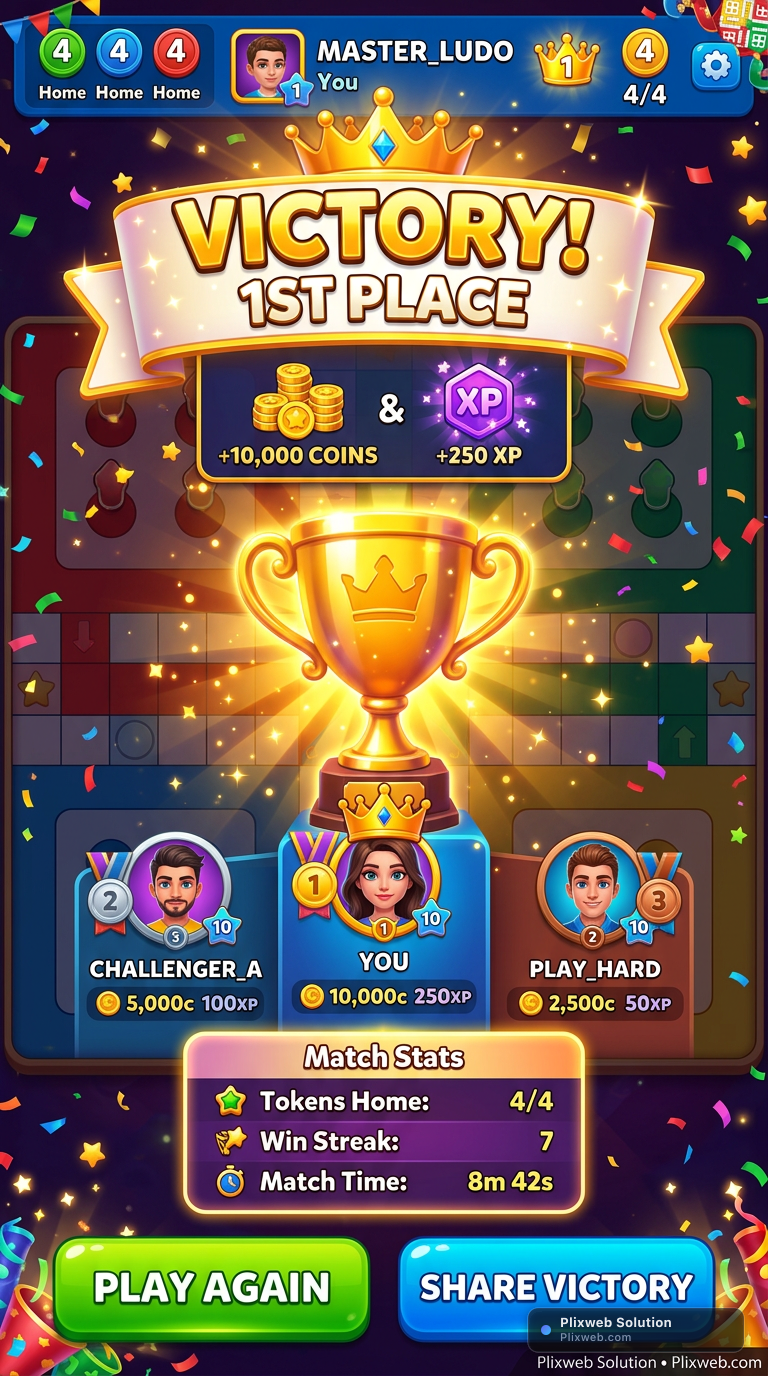
Key Retention Drivers:
- Celebration Confetti & Trophies: High-impact visual fanfare celebrating the 1st place winner.
- Instant Virtual Rewards: Gold coins and player XP are instantly credited with zero latency.
- Dynamic Leaderboards: Weekly and monthly rank tournaments that incentivize players to return daily.
- One-Tap Social Sharing: Players can generate branded victory story cards to share their achievements directly to WhatsApp Status and Instagram.
Sustainable Revenue Generation & In-Game 3D Customization Store
Without relying on gambling or betting, modern Ludo games generate millions in high-margin digital revenue through optional cosmetic personalization and non-intrusive rewarded ads.
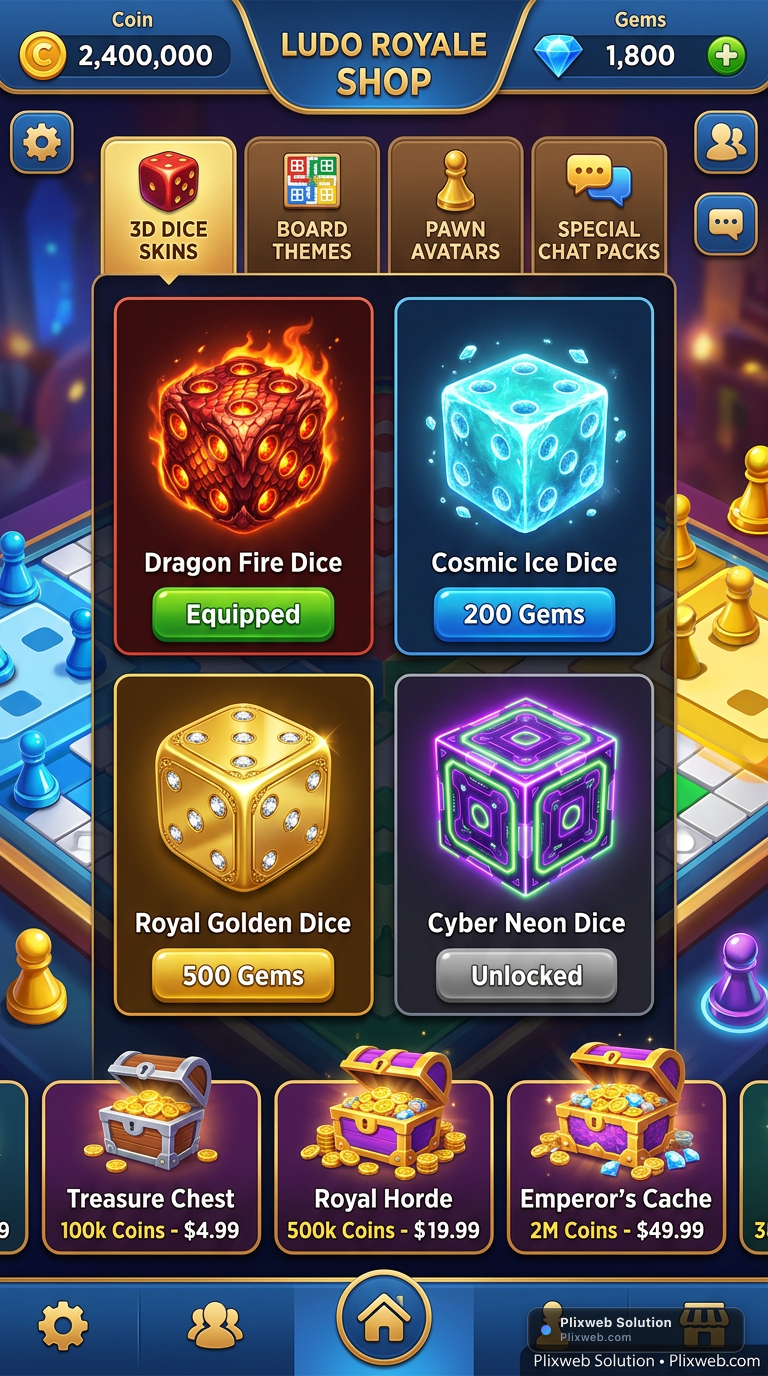
Primary Revenue Streams:
- Custom 3D Dice Skins: Premium animated dice featuring unique particle effects such as Dragon Fire, Cosmic Ice, and Royal Gold.
- Luxury Board Themes: Collectible playing surfaces including Classic Mahogany Wood, Royal Velvet, and Cyberpunk Neon.
- Seasonal Battle Pass: Monthly progression tracks unlocking exclusive avatars, emojis, and custom chat bubbles.
- Rewarded Video Advertisements: Players watch short 15-second video ads in exchange for free daily spins and bonus coins.
Frequently Asked Questions (Developer & Founder FAQ)
Q1: Is a custom multiplayer Ludo game 100% legal to launch in India in 2026?
Yes. When built under a Free-to-Play (F2P) social gaming model utilizing virtual coins, in-app cosmetic purchases, and rewarded advertisements, the game is 100% legal across all Indian states. It does not fall under the strict provisions of the Public Gambling Act or state-specific RMG restrictions because players cannot deposit or withdraw real currency.
Q2: Why choose Flutter over Unity for 2D/3D Ludo game development?
While Unity is outstanding for complex 3D worlds, Flutter 3.x delivers significantly smaller app package sizes (18MB vs 85MB+ for Unity), nearly instant cold-start launch times (sub-800ms), seamless native Android/iOS view embedding, and drastically lower device battery consumption.
Q3: How much server infrastructure is needed for 10,000 concurrent players?
With an optimized WebSockets and Redis Pub/Sub architecture, 10,000 concurrent players (representing roughly 2,500 simultaneous 4-player rooms) require only two 4-vCPU / 8GB RAM application nodes behind an NGINX load balancer, paired with a managed 4GB Redis instance. Monthly cloud infrastructure costs typically remain under $120–$180.
Partner with Jkard Solution — Launch Your Custom Game
At Jkard Solution, we architect, engineer, and deploy high-performance custom mobile games, real-time multiplayer systems, and enterprise backends. From initial Figma UI/UX designs to scalable Kubernetes deployment and Google Play / App Store submission, our dedicated engineering team delivers turnkey solutions tailored to your business goals.
What You Get with Jkard Solution:
- 100% Full Source Code Ownership (Flutter Client + Node.js/Go Backend)
- Cryptographic Server-Side Fair-Play & RNG Architecture
- Real-Time WebSockets Clustering with Redis In-Memory State Sync
- Complete In-App Purchase, AdMob, and Private Room Integrations
- Guaranteed App Store & Google Play Store Publishing Approval
- 90 Days of Dedicated Post-Launch Production SLA & Maintenance
Ready to build the next breakout multiplayer board game? Contact our Lead Solution Architects today for a comprehensive technical scoping session and live prototype demonstration.
Focus keywordHow to Build a Custom Multiplayer Ludo Game in 2026: Architecture, Fair-Play RNG
GEO markets: India · United States · United Kingdom · Canada · Australia