
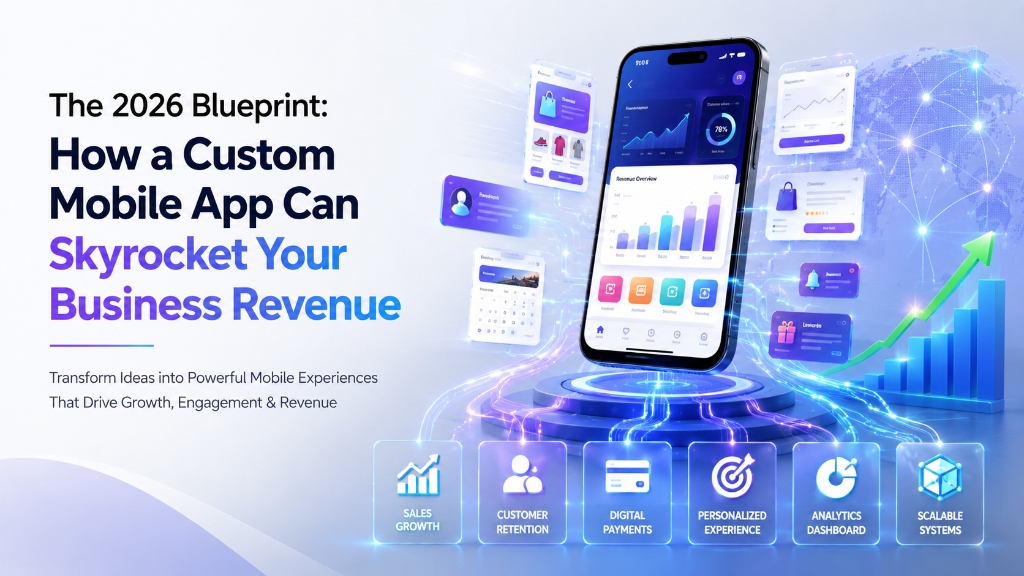
Why Your Business Needs a Custom Mobile App Today
In today's hyper-connected world, having just a website is no longer enough. The shift towards mobile-first experiences means that if your business isn't accessible via a dedicated app, you are likely leaving money on the table. Custom mobile app development has become the cornerstone of digital transformation for enterprises and startups alike.
Whether you are building an e-commerce platform, a SaaS dashboard, or a customer loyalty application, a well-engineered app provides unparalleled user experience, faster loading times, and direct access to your audience through push notifications. Unlike responsive websites, mobile apps can leverage native device capabilities such as GPS, camera, biometrics, and offline storage, enabling you to build highly personalized user journeys.
Native vs. Cross-Platform: Choosing the Right Tech Stack
One of the first critical decisions you will face is selecting the development methodology. The choices generally fall into two categories:
- Native Development (Swift & Kotlin): Writing separate codebases for iOS (Swift) and Android (Kotlin). This approach offers the absolute best performance, smoothest animations, and immediate access to new OS features, though it requires a higher budget and double the development effort.
- Cross-Platform Frameworks (React Native & Flutter): Writing a single codebase that runs on both iOS and Android. Modern cross-platform frameworks compile to native code, delivering near-native performance while saving up to 40% in development costs and time-to-market.
At Jkard, we analyze your target audience, performance requirements, and budget constraints to recommend the perfect tech stack that yields the highest return on investment.
Top App Development Trends to Watch in 2026
The tech landscape is evolving rapidly. To ensure your app stands out in the crowded App Store and Google Play, you must leverage the latest trends:
- AI & Machine Learning Integration: From intelligent chatbots to predictive analytics, Artificial Intelligence is making apps smarter, offering customized content feeds and voice-activated search interfaces.
- IoT & Wearable Integration: Connecting mobile apps with smart devices, home automation systems, and fitness wearables to create cohesive ecosystems.
- Enhanced Security & Biometrics: Implementing advanced encryption, biometric authentication (FaceID/TouchID), and decentralized identity to protect user data from escalating cyber threats.
- Edge Computing & Cloud-Native Backends: Offloading heavy computations to cloud edge nodes to ensure sub-millisecond response times and lag-free user interactions.
The Step-by-Step Mobile App Development Lifecycle
Building a successful mobile application requires a structured, phase-based engineering approach. Here is how we turn your vision into a polished digital product:
- Discovery & Wireframing: We define the target user, outline core user flows, and create visual blueprints (wireframes) to map out the application's structure.
- UI/UX Design: Our designers craft stunning, high-fidelity visual mockups, selecting color palettes, typography, and interactive micro-animations that reflect your brand identity.
- Agile Development: Our engineers build the application in bi-weekly sprints, allowing you to test working builds of the app throughout the development cycle.
- Quality Assurance & Testing: We conduct rigorous automated and manual testing across dozens of physical iOS and Android devices to eliminate bugs, memory leaks, and UI glitches.
- Deployment & Launch: We manage the entire submission process for the Apple App Store and Google Play Store, ensuring compliance with all privacy policies and guidelines.
Understanding the Real Cost of Mobile App Development
What does it actually cost to build a mobile app? The price varies based on complexity:
- Basic MVP (Minimum Viable Product): A clean, simple application with core features, basic authentication, and standard UI components. Typically ranges from $15,000 to $25,000.
- Medium Complexity App: Includes database synchronization, payment gateway integrations, social features, and custom dashboards. Usually ranges from $30,000 to $60,000.
- Enterprise-Grade Application: Real-time syncing, high security, complex offline database logic, multi-role panels, and microservices backends. Can exceed $80,000.
Beyond initial development, it's crucial to budget about 15-20% of the original cost annually for hosting, API fees, security updates, and OS compatibility maintenance.
Monetization: How to Generate Serious Revenue From Your App
A mobile app should be a profit center, not an expense. There are several proven ways to monetize your mobile application:
- In-App Purchases (IAP): Selling digital goods, premium content, or virtual currency directly within the application.
- Subscription Models: Providing ongoing value or premium features via weekly, monthly, or yearly recurring billing (ideal for SaaS and utility apps).
- Freemium Tier: Offering a fully functional basic version for free while locking advanced power features behind a premium upgrade.
- Targeted Ad Placement: Displaying non-intrusive banner or native ads through platforms like Google AdMob.
Conclusion: Start Building Your Future Today
Investing in mobile app development is investing directly in the future scalability, customer engagement, and direct revenue streams of your business. If you are ready to turn your digital vision into a high-performing reality, reach out to the expert engineering team at Jkard Solution today, and let's construct a digital product that elevates your brand to new heights.
Focus keywordThe 2026 Blueprint: How a Custom Mobile App Can Skyrocket Your Business Revenue
GEO markets: India · United States · United Kingdom · Canada · Australia